
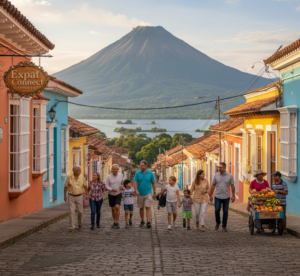
The global expat landscape in 2026
In 2026, the global expat landscape has undergone a massive shift. As traditional hotspots like Portugal and Costa Rica see rising costs and “gringofication,” savvy relocators are turning their sights toward Nicaragua. Often called the “Land of Lakes and Volcanoes,” this country is no longer just a backpacker’s secret; it is the #1 emerging destination for retirees, digital nomads, and investors seeking to decouple their lifestyle from the high-inflation economies of the West.
At Expat Connect Services, we don’t just track these trends—we live them. We’ve helped individuals and families navigate the transition to Nicaragua, ensuring they avoid the common pitfalls and “novice mistakes” that can turn a dream move into a logistical headache.
This guide serves as your comprehensive blueprint for understanding how Nicaragua “falls” in the 2026 global market and how you can make your move with absolute confidence.
Part 1: Why Nicaragua is the 2026 Value Leader
Nicaragua’s appeal in 2026 is built on a foundation of “Strategic Affordability.” While neighboring Panama is highly modern and dollarized, and Costa Rica is lush but expensive, Nicaragua offers a raw, authentic, and ultra-affordable middle ground.
The Financial Landscape
For a single person, a budget of $800–$1,200 per month provides a standard of living that would require more than $ 4,000 in most US or Canadian cities. A couple can live in a state of “unapologetic luxury”—complete with domestic help, frequent travel, and high-end dining—for $1,800–$2,200.
Comparative Monthly Expenses (2026 Estimates):
Housing (2-Bedroom Home): $300 – $800
Dining (Dinner for 2 at a mid-range spot): $20 – $30
Daily Domestic Help: $10 – $15
High-Speed Fiber Internet: $55
Electricity (Standard usage): $70 – $150
Infrastructure & Digital Nomads
Crucially for 2026, Nicaragua has made leaps in infrastructure. Fiber-optic internet is now standard in all major expat hubs, making it a premier destination for those working remotely.
Part 2: The Nicaraguan Map—Where Should You Live?
Nicaragua’s diverse geography means there is a “micro-culture” for every type of expat. Here is how the cities are across the country:
1. Granada (The Colonial Anchor)
Granada is the crown jewel for those who value history and walkability.
The Vibe: European-style plazas, vibrant markets, and restored colonial mansions.
The Community: The largest and most established expat hub in the country.
Expat Connect Tip: Use our network to find “off-market” colonial rentals that haven’t hit the major listing sites yet. expatconnectservices.com/member-directory
2. San Juan del Sur (The Pacific Gateway)
A former fishing village turned surfing and social headquarters.
The Vibe: Active, youthful, and sunset-focused. It’s where you go for beach clubs and co-working spaces.
The Cost: Higher than Granada, but still 60% cheaper than coastal California.
3. Matagalpa & Estelí (The Highlands)
For those who prefer “Eternal Spring” to tropical heat.
The Vibe: Green mountains, coffee plantations, and a cooler, crisper climate.
The Draw: Lower electricity bills (no A/C needed) and a more rugged, outdoorsy lifestyle.
4. Managua (The Modern Hub)
While many avoid the capital, it is essential for those who want the best of everything.
Infrastructure: Home to the Vivian Pellas Hospital (JCI Accredited) and high-end malls like Galerías Santo Domingo.
Expat Connect Tip: We recommend the Las Colinas or Villa Fontana neighborhoods for expats who need to be near the capital for business or specialized healthcare.
Part 3: The Expat Connect Services Residency Roadmap
Navigating residency in 2026 is manageable, but the bureaucracy is real. Nicaragua offers several pathways, and choosing the right one is the difference between a 3-month and a 12-month process.
Top Residency Tiers for 2026
Pensionado (Retiree): Requires proof of a $1,250 monthly pension (from SS or private).
Rentista (Private Income): Requires proof of $1,250 monthly from investments or rental income.
Investor Visa: Granted to those who invest a minimum of $30,000 into a Nicaraguan business or real estate.
The 6-Month Moving Timeline
Month 1: Document gathering (Birth certificates, background checks, proof of income).
Month 2: The “Apostille” phase. Every document must be certified by your home country’s government.
Month 3: Arrival and Exploratory Stay. Secure a 3-month rental while you scout your permanent location.
Month 4: Submission. Work with an Expat Connect vetted attorney to file your application with Migración in Managua.
Month 5: Final Interviews and Local Health Checks.
Month 6: Approval and Cedula (ID card) pickup.
Part 4: The Moving Checklist (Logistics & Shipping)
Shipping your life to a different country is a massive undertaking. Here is the checklist we provide our clients at Expat Connect Services:
Pre-Departure
[ ] Health Certificate: Obtain a certified letter from your doctor stating you are free of contagious diseases (must be Apostilled).
[ ] Financial Audit: Notify your banks and move to a platform like Charles Schwab for fee-free international ATM withdrawals.
[ ] Vehicle Check: If shipping a car, ensure it is less than 10 years old (unless you are a returning Nicaraguan citizen).
[ ] Property Management: If you aren’t selling your home, connect with our network to find a manager in your home country.
Shipping & Customs
[ ] Inventory List: Create a typed, detailed list of every box. Include serial numbers for all electronics (TVs, laptops, appliances).
[ ] Exoneration Eligibility: If you are a legal Pensionado, you may be eligible to import up to $20,000 of household goods tax-free.
[ ] Consignee Details: Ensure the shipping manifest matches your passport exactly to avoid $100+ fines at the Port of Corinto.
Part 5: How Expat Connect Services Bridges the Gap
Relocating is about more than just numbers; it’s about community and security. Expat Connect Services was built to be your “ground team” in Nicaragua. Our mission is to provide a one-stop platform that connects you to hand-picked, vetted professionals who understand the nuances of the expat journey.
Our Service Pillars:
Legal Support: English-speaking lawyers who specialize in residency and property titles.
Tax Strategy: Our partners specialize in dual-citizen tax treaties to ensure you aren’t double-taxed.
Real Estate Guidance: From colonial gems in Granada to eco-friendly builds in Tola.
Property Management: On-the-ground support to protect your investment.
Insurance Comparisons: Helping you choose between local plans (approx. $50–$80/mo) and international expat coverage.
Why Work With Us?
We aren’t just “selling a service.” We are expats who made the move, made the mistakes, and built the network we wish we had when we started. We focus on transparency—no hidden fees, no “gringo pricing,” and no fluff.
Part 6: Reality Check—The Challenges
To be truly helpful, we must be honest. Nicaragua in 2026 is beautiful, but it requires a specific mindset.
”Nica Time”: Things move slower here. Bureaucracy is a test of patience.
Infrastructure Blips: While improving, power outages and water pressure issues still occur. We recommend properties with backup systems.
The Language Barrier: You can survive in San Juan del Sur with English, but to truly thrive in Granada or Leon, basic Spanish is your key to the culture.
Closing Thoughts
Nicaragua is at the feet of those willing to take the leap. It is a country that rewards the adventurous and the budget-conscious alike. With a lower cost of living, a friendly population, and a residency process that remains one of the most accessible in the world, the opportunity for a “lifestyle upgrade” has never been clearer.
Whether you are dipping your toe in with a 3-month stay or ready to commit to a full relocation, Expat Connect Services is here to ignite your next chapter.
Are you ready to start your transition?
Would you like to connect with one of our vetted legal partners for a consultation on your residency options?