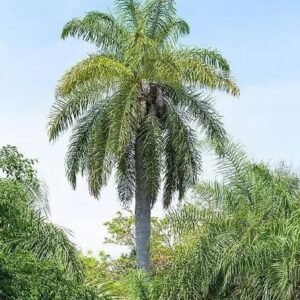
The “Murder Tree” of San Juan del Sur: A Pet-Safety Warning for Expats
The species identifications, toxin mechanisms and medical claims in this article were verified in July 2026 against veterinary and botanical sources, linked at the end. The account of Dallas is a first-hand story from our own community in San Juan del Sur. Nothing here is a substitute for a veterinarian — if you suspect poisoning or obstruction, go to one immediately.
It started with a walk. Dallas — a healthy, curious dog in San Juan del Sur, doing what dogs do — found some seeds on the ground beneath a local palm and swallowed one. Within hours, his owner knew something was seriously wrong. This article exists because of Dallas, and because what happened to him is almost entirely preventable if you know what to look for.
The short answer. The palm locals around San Juan del Sur call the “murder tree” is consistent with the Coyol palm (Acrocomia aculeata). Its danger to dogs is physical, not chemical: the seed sits in an extremely hard woody shell that a dog cannot break down, and a swallowed seed can lodge in the gut like a cork. That is a surgical emergency, not a wait-and-see.
It is not the only hazard. Nicaragua’s coast is also home to the manchineel — the most dangerous tree in the world — along with the sago palm (a genuine liver toxin), venomous snakes, and cane toads. The good news is that every one of these is manageable once you know it exists.
What is the “murder tree”?
In the San Juan del Sur area, residents have given a striking nickname to a palm that grows commonly across the region: el árbol asesino — the murder tree.
The tree is consistent with Acrocomia aculeata, known variously as the Coyol Palm, Macaw Palm or Grugru Palm. It is native throughout tropical Central and South America and a familiar sight across Nicaragua, where its sap is traditionally fermented into a drink called coyol wine.
What it looks like
- Height — a medium to tall palm, typically 10–20 metres
- Trunk — grey-brown, covered in sharp black spines up to 10 cm long
- Fronds — long and feathery
- Fruit — large clusters of small round fruits, roughly 2–4 cm across, near the crown; green when young, dark brown or black when ripe or fallen
What does the Coyol seed do to a dog?
The danger here is mechanical, and getting that right matters, because it changes what you watch for.
The fruit is edible for people — the sap becomes coyol wine and the kernel yields cooking oil — but the seed sits inside an extremely hard, woody shell that a dog cannot break down. Laboratory testing of the endocarp records compressive strengths in the hundreds of megapascals; this is closer to a stone than a seed.
When a dog swallows one whole, it passes into the digestive tract and can lodge there, acting like a cork — blocking the gut and stopping anything from moving through. That is exactly what happened to Dallas.
A lodged seed is a genuine emergency. An untreated intestinal blockage can cut off the blood supply to the gut, cause it to rupture, and turn fatal. The hard shell and its fragments can also tear or irritate the stomach and intestinal lining on the way down.
Signs a dog may have a seed lodged in the gut
- Repeated vomiting, often bringing nothing up
- Refusing food or water
- A hard, painful or swollen belly
- Straining to pass stool, or passing none
- Lethargy and obvious discomfort
- Drooling
Even a single seed can be life-threatening. Do not wait to see whether symptoms develop before seeking veterinary care.
What should you do if your dog swallows a palm seed?
- 1. Remove any remaining seeds from your dog’s reach
- 2. Do not induce vomiting at home unless a vet specifically tells you to
- 3. Get to a veterinarian as fast as possible — ideally within a few hours
- 4. Bring a sample of the seed, or a photo of the tree, so the vet can judge what was swallowed and whether it is likely to obstruct
- 5. Tell the vet exactly when it happened and what your dog ate
Treatment depends on timing. Caught very early, a vet may be able to induce vomiting. Otherwise it usually means imaging — an X-ray or ultrasound to locate the seed — and, if it has lodged, removal by endoscopy or surgery, with supportive care such as intravenous fluids. The faster treatment begins, the better the outcome.
In San Juan del Sur and the surrounding area, ask your local expat community or ECS network for the nearest veterinary clinic before you need one — not after.
What is the manchineel, and why is it worse?
While the Coyol palm was the culprit in Dallas’s case, Nicaragua’s coast — including the Pacific near San Juan del Sur — is also home to the manchineel (Hippomane mancinella), which Guinness World Records designated in 2011 as the most dangerous tree in the world.
The manchineel — manzanilla de la muerte in Spanish, “little apple of death” — is not a palm. It is a medium-sized tree with shiny green leaves and small, apple-like fruits that look deceptively edible.
Every part of the manchineel is toxic
- The milky sap causes severe chemical burns on skin and eyes
- The fruit causes blistering, swelling and burning of the mouth, throat and digestive tract if eaten
- Standing under the tree during rain can blister skin as diluted sap washes down
- Burning the wood releases fumes that can damage the eyes and lungs
For a curious dog, the fruit is the danger — it looks attractive and ingestion causes severe burning, swelling, vomiting, and can be fatal. The manchineel grows in coastal areas throughout Central America and the Caribbean. In Nicaragua it is most likely encountered in coastal zones, and it is sometimes — but not always — marked with warning signs. Do not assume it has been marked.
Which other plants are toxic to pets in Nicaragua?
The Coyol and manchineel are not the only plant hazards. These are known to be toxic to dogs and cats and are present in Nicaragua.
Highly toxic
- Sago Palm / Cycas — extremely dangerous, often confused with ornamental palms. Contains cycasin, which causes acute liver failure. This is the plant that genuinely poisons, not the Coyol. See the correction below on survival rates
- Oleander (Nerium oleander) — commonly planted ornamentally; all parts toxic; causes heart arrhythmia, vomiting, collapse
- Dieffenbachia (dumb cane) — common houseplant; intense oral burning, swelling, difficulty swallowing
- Caladium — decorative; oral pain and swelling
- Lantana — common flowering shrub; berries toxic, can cause liver failure
- Philodendron — very common indoors; oral irritation and swelling
Also hazardous
- Poinsettia — mild to moderate; vomiting and irritation
- Tropical milkweed — toxic if consumed in quantity
If you are landscaping in Nicaragua, verify the toxicity of every plant before introducing it. What is sold as an ornamental in a garden centre can be dangerous to pets.
Which animals are dangerous to pets in Nicaragua?
Plants are only half the picture. Nicaragua’s biodiversity is one of its great attractions — and it means your pet shares the environment with creatures that can do real harm.
Snakes
Fer-de-Lance (Bothrops asper), known locally as terciopelo — velvet. This is the most dangerous snake in Central America and responsible for the majority of serious snakebites in the region. A pit viper with a broad flat head, found in lowland areas, near water and in agricultural land, including gardens and coastal properties. Its venom causes severe tissue destruction and haemorrhage and can be fatal if untreated. Dogs are at high risk from ground-level curiosity.
Coral snakes — Nicaragua has three species, with a potent neurotoxic venom. A coral snake typically has to chew to inject a full dose, but any bite is a medical emergency. Identifiable by banded red, yellow and black colouring — though patterns vary, so this should not be the sole basis for identification.
Central American Rattlesnake (Crotalus simus) — found in drier regions; venom causes pain, swelling and tissue necrosis.
Cane toads
The cane toad (Rhinella marina), known locally as sapo, is widespread and highly toxic. When a dog mouths or licks one, the toad secretes a bufotoxin that causes immediate salivation, foaming, disorientation and cardiac arrhythmia. This is a veterinary emergency.
Scorpions, tarantulas and parasites
- Scorpions — common throughout Nicaragua, including in homes. They hide in shoes, clothing, bedding and dark corners. The sting is painful and can trigger a serious allergic reaction in pets and people. Check shoes and clothing before use, especially in dry season
- Tarantulas — present but generally reclusive; they bite if cornered. The bite is painful but rarely dangerous unless there is an allergy. Dogs investigating one can be bitten on the nose or paws
- Mosquitoes — carry heartworm (Dirofilaria immitis), which is transmitted to dogs and can be fatal untreated. Have your dog on heartworm prevention before arriving and throughout your stay; ask a vet about the correct protocol for Central America
- Ticks — common, and can transmit tick fever and other diseases. Check your dog regularly, particularly after walks in grass or forest
What does this mean if you are moving to Nicaragua with a pet?
None of this should put you off. Thousands of expats live here happily with their dogs and cats. But preparation is the difference between a scare and a tragedy.
Before you arrive
- Find a trusted vet in your area before you need one — not during a crisis
- Know the emergency protocol: who to call, how far the nearest clinic is, whether it offers 24-hour service
- Bring a supply of your pet’s regular medications; availability varies
- Get vaccinations and parasite prevention up to date — see our pet import requirements guide for the entry rules
- Learn to identify the common toxic plants in your specific area
Once you are settled
- Walk your property and identify any palm species or unfamiliar plants — consult a local expert if unsure
- Keep your yard clear of fallen seeds and fruit, particularly near palms
- Supervise your dog around unfamiliar vegetation, especially in the first months
- Know what a fer-de-lance and a cane toad look like
Connect with the local expat community. The networks in San Juan del Sur, Granada and Managua are experienced, generous, and often faster than a Google search when you need a vet recommendation at 10pm on a Sunday.
A note on Dallas
Dallas survived. His owners acted quickly, recognised something was wrong, and got him to a vet in time. That speed made the difference.
Not every dog is that lucky. Many owners do not know about the murder tree until after their pet has already found the seeds on the ground. That is why this article exists.
Frequently asked questions
What is the “murder tree” in Nicaragua?
It is a local nickname used around San Juan del Sur for a spiny palm consistent with the Coyol palm (Acrocomia aculeata). The danger to dogs is physical rather than chemical: the fruit contains a seed in an extremely hard woody shell that a dog cannot digest, and a swallowed seed can lodge in the gut and cause a life-threatening intestinal blockage.
What happens if a dog swallows a Coyol palm seed?
The hard-shelled seed can lodge in the digestive tract like a cork, blocking the gut. Signs include repeated vomiting, refusing food or water, a hard or swollen belly, straining to pass stool, lethargy and drooling. An untreated blockage can cut off blood supply to the gut and become fatal, so it is a veterinary emergency. Do not wait for symptoms to worsen before seeking care.
Is the manchineel tree dangerous to dogs in Nicaragua?
Yes. The manchineel (Hippomane mancinella), designated by Guinness World Records as the most dangerous tree in the world, grows in Nicaragua's coastal areas. Every part is toxic. Its apple-like fruit can attract a curious dog and cause severe burning, swelling, vomiting and, potentially, death. It is not always marked with warning signs.
What is the survival rate for sago palm poisoning in dogs?
Better than often stated, if treatment is prompt. Older published figures put mortality at 32 to 50 percent, but a large ASPCA Animal Poison Control dataset of 1,398 cases recorded mortality of about 2.4 percent. It remains a serious poisoning that causes liver failure and requires immediate veterinary care, but survival rises sharply with quick treatment.
What is the most dangerous snake for pets in Nicaragua?
The fer-de-lance (Bothrops asper), known locally as terciopelo, is the most dangerous snake in Central America and causes most serious snakebites in the region. It is found in lowland areas, near water and in gardens and coastal properties, putting ground-level dogs at particular risk. If your dog is bitten, keep it calm, immobilise the limb and get to a vet immediately; do not suck out venom or apply a tourniquet.
Are cane toads poisonous to dogs in Nicaragua?
Yes. The cane toad (Rhinella marina), known locally as sapo, is widespread and highly toxic. If a dog licks or mouths one, the toad secretes a bufotoxin that causes salivation, foaming, disorientation and cardiac arrhythmia. Rinse the dog's mouth with clean water, tilting the head forward so it does not swallow, and get to a vet immediately.
Moving to Nicaragua with a pet? We can connect you with vets and the people who know the ground.
Find a vetted professionalSources
- Clinician’s Brief: Sago Palm Toxicosis in Dogs — cycasin toxicity, published mortality of 32–50%, and the ASPCA dataset of 1,398 cases showing ~2.4% mortality
- Guinness World Records: Most Dangerous Tree — the manchineel designation
- Merck Veterinary Manual: Toad Poisoning in Dogs and Cats — bufotoxin mechanism and signs
- Britannica: Fer-de-lance — range, venom effects and regional bite burden
- Microstructure and mechanical properties of the Acrocomia fruit shell — the hardness of the Coyol endocarp
- Acrocomia aculeata species profile — range, description and coyol wine
- ASPCA Toxic and Non-Toxic Plant List — oleander, dieffenbachia, lantana, philodendron and others
Need help in Nicaragua? Find a vetted professional.
Connect with an English-speaking, ECS-verified specialist — lawyers, doctors, advisors and property experts who know the system.
Find a professional →